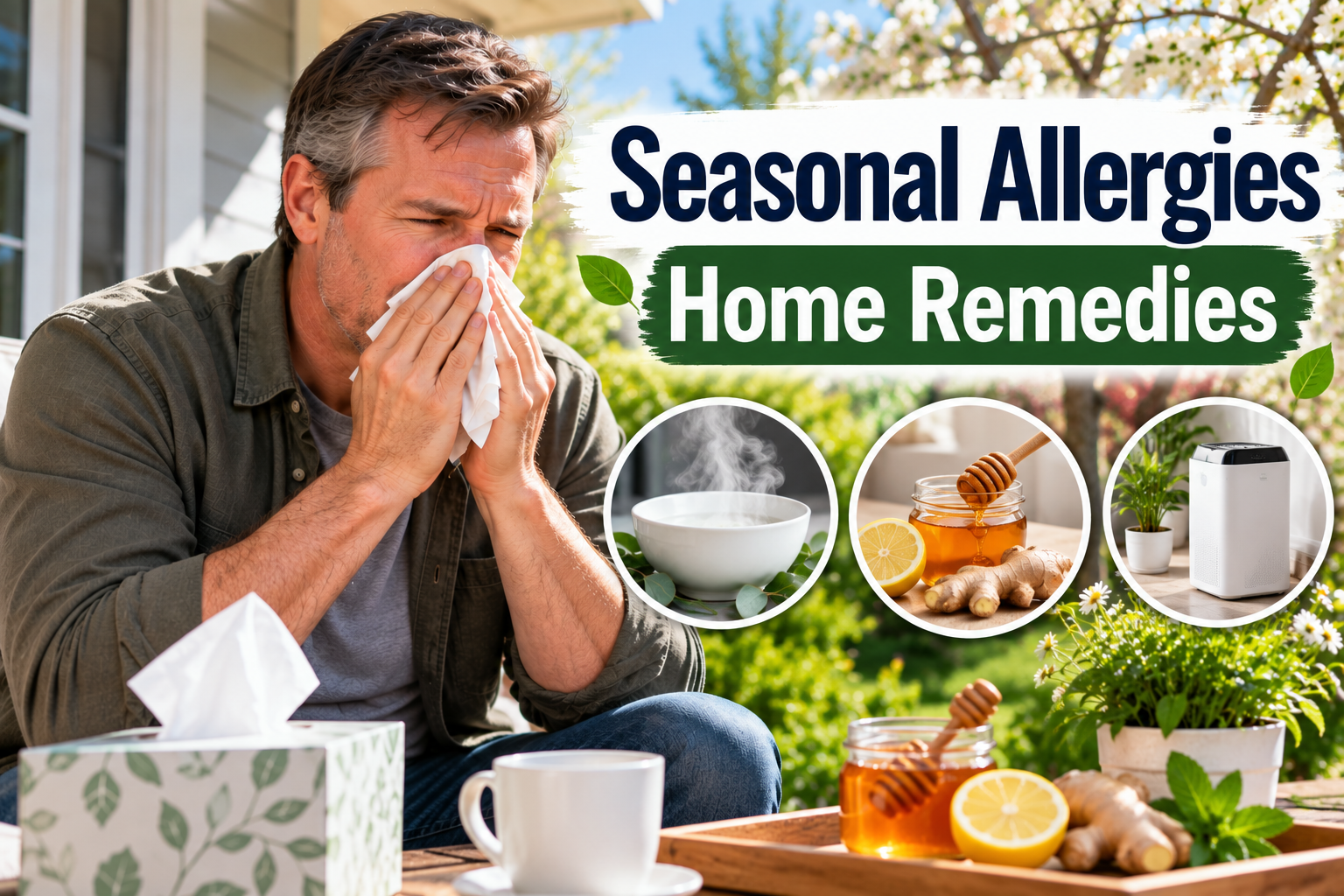
You know that feeling when you wake up ready to start your day, only to sneeze five times before you’ve even left the bed?
Your nose is running, your eyes are itchy, and somehow you feel like you’ve caught a cold — except you don’t actually feel sick.
Yep. It could be seasonal allergies.
And if pollen is your trigger, allergy season can be seriously annoying. The good news? You don’t always need to completely change your life to feel better. A few simple habits can make a noticeable difference.
Here are some easy seasonal allergies home remedies and everyday tricks I’d suggest trying first.
First, Why Do Seasonal Allergies Happen?
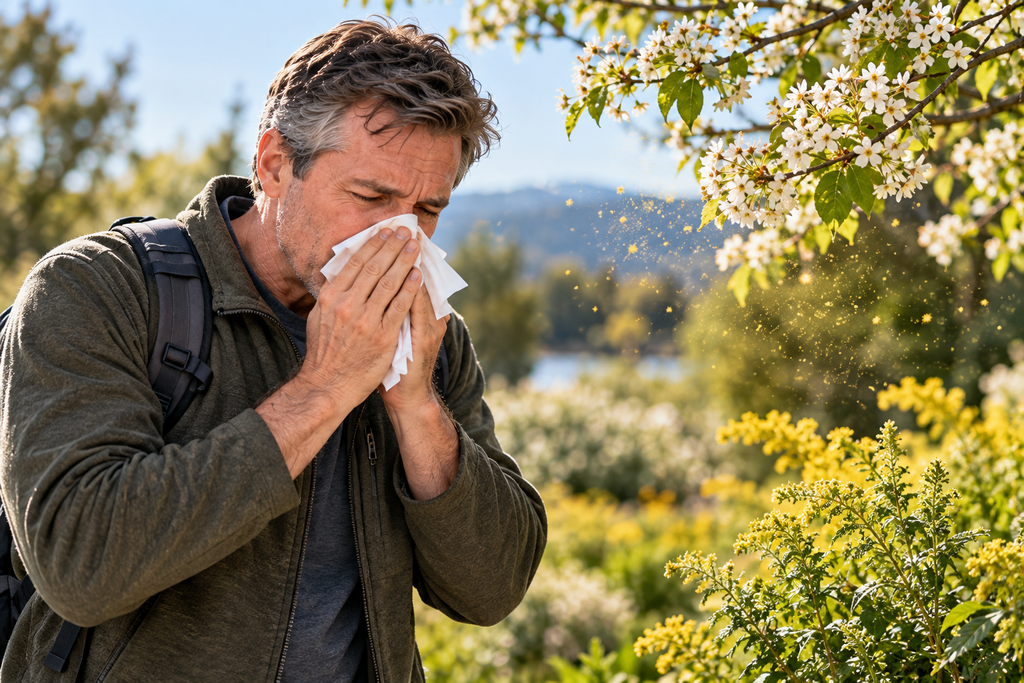
Basically, your immune system sees something harmless — usually pollen — and decides it’s a threat.
Your body responds by releasing chemicals such as histamine, which can lead to sneezing, a runny or stuffy nose, itchy eyes, and other familiar allergy symptoms.
In the spring, tree and grass pollen can be a problem. In late summer and fall, ragweed pollen is a common trigger.
So if you notice that your nose starts acting up around the same time every year, seasonal allergies could be the reason.
10 Seasonal Allergies Home Remedies That Can Actually Help
1. Take a Shower After Being Outside
This is one of the easiest things you can do.
Pollen can stick to your hair, skin, and clothes while you’re outside. If you come home and jump straight into bed, you’re basically bringing those allergens with you.
A quick shower after spending a lot of time outdoors can wash much of that pollen away.
Little tip: If your allergies are bad, showering before bed can be especially helpful.
2. Change Your Clothes When You Get Home
Here’s another simple one that people often overlook.
If you’ve been gardening, walking through a park, mowing the lawn, or just spending several hours outside, your clothes may have picked up plenty of pollen.
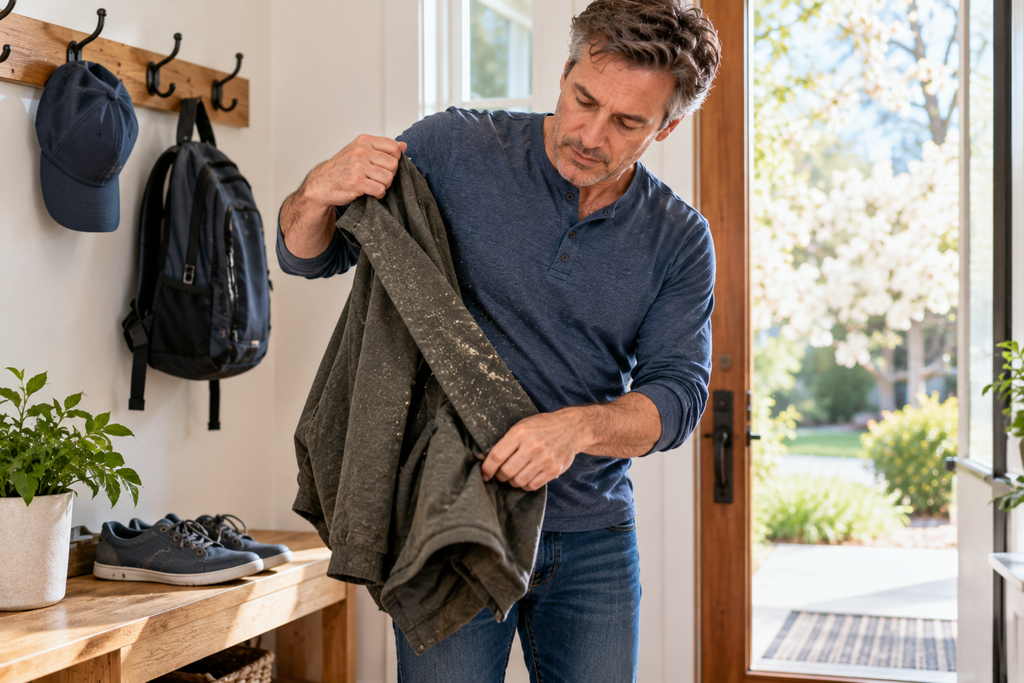
Change into clean clothes when you get home and put the outdoor clothes in the laundry.
It takes a minute, but it can help keep pollen from spreading around your house.
3. Keep the Windows Closed on High-Pollen Days
I know — opening the windows on a beautiful day feels great.
But if pollen is one of your allergy triggers, that fresh breeze can bring a lot of it straight into your home.
During high-pollen periods, keep your windows closed and use your air conditioning if needed.
You can also check your local pollen forecast before planning long outdoor activities.
4. Give Your Nose a Saline Rinse

When your nose feels stuffed up with pollen and mucus, a saline nasal rinse can be surprisingly soothing.
It works by flushing irritants and mucus out of your nasal passages.
If you use a neti pot or another nasal-rinse device, use only appropriately prepared water according to the product or health authority instructions. Don’t use untreated tap water.
And if you’ve never tried a nasal rinse before, ask a healthcare professional or pharmacist if you’re unsure how to do it safely.
5. Don’t Rub Your Eyes
I know this one is easier said than done.
When your eyes are itchy and watery, your first instinct is to rub them. Unfortunately, rubbing can make the irritation worse.
Instead, wash your hands and gently rinse your face. A cool, clean compress over closed eyes can also feel really soothing.
And try to avoid touching your eyes with pollen-covered hands after you’ve been outside.
6. Make Your Bedroom a Low-Pollen Zone
Your bedroom should be the place where your body gets a break from allergens.
Try to keep it clean and wash your bedding regularly. If you’ve been outside, don’t lie down on your bed wearing the same clothes you wore outdoors.
If pet dander is also a problem for you, keeping pets out of the bedroom may help.
Think of your bedroom as your allergy-free zone.
7. Leave Your Shoes at the Door
This is such a small habit, but it makes sense.
Your shoes spend the day walking through grass, dirt, sidewalks, and all kinds of outdoor environments. There’s no reason to bring all of that into your bedroom or living room.
Leave your shoes near the entrance when you get home.
Your floors — and possibly your nose — will thank you.
8. Check the Pollen Forecast Before Going Out
You don’t have to hide inside your house all allergy season.
Instead, try to be strategic.
If the pollen count is particularly high, you might choose to exercise indoors or postpone gardening until later.
Checking the pollen forecast before spending several hours outside can help you plan around your triggers.
9. Try a HEPA Air Purifier
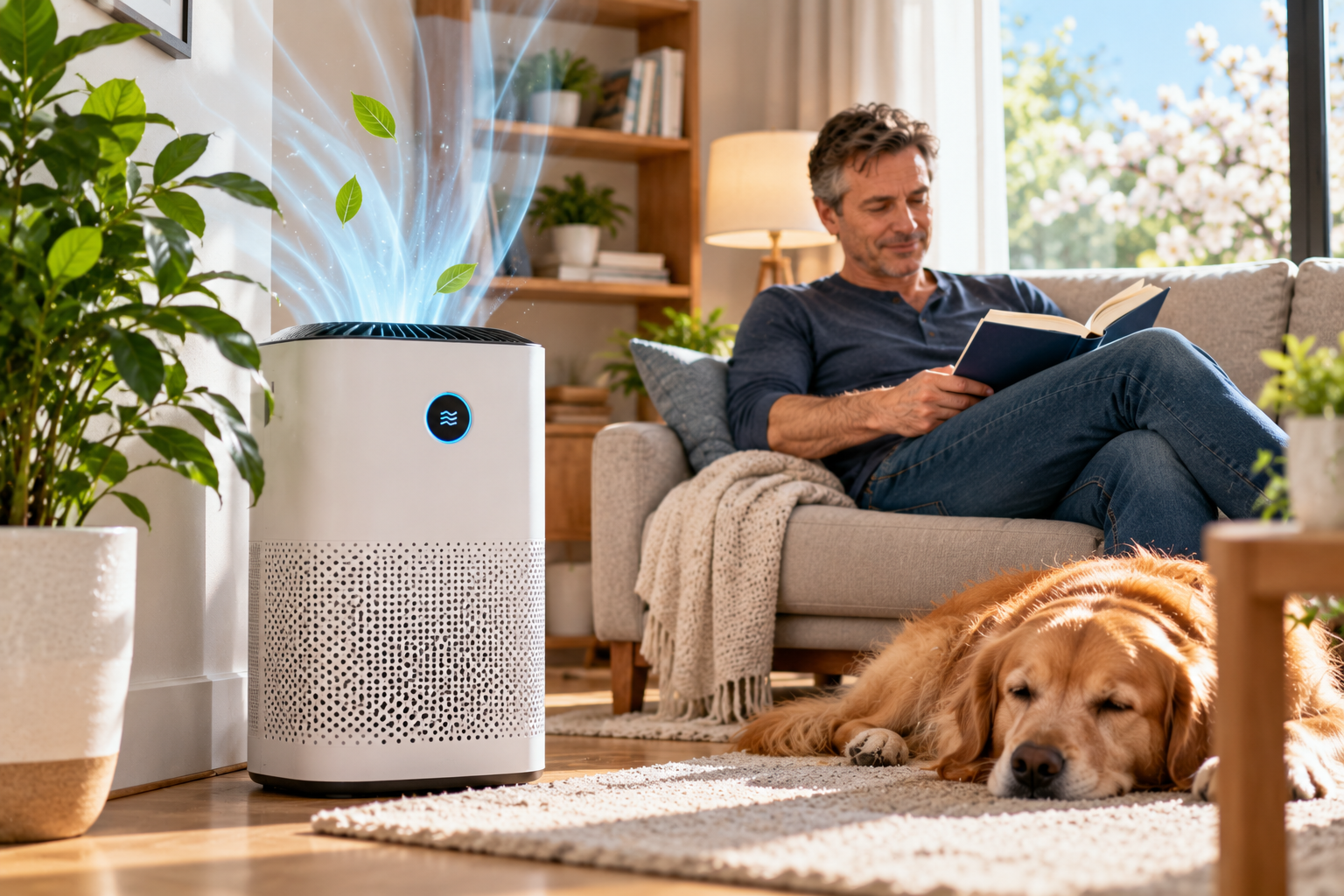
If allergies bother you mostly at home, an air purifier with a HEPA filter may be worth considering.
It can help remove certain airborne particles from indoor air.
Just remember that an air purifier isn’t a magic solution. Keeping your home clean and reducing the allergens you’re bringing indoors still matters.
10. Find Your Personal Triggers
This might actually be the most useful tip of all.
Pay attention to when your symptoms get worse.
Do they flare up after mowing the lawn?
When you’re gardening?
After a windy day?
When you spend time around certain trees or grasses?
Once you start noticing a pattern, you can take steps to avoid your specific triggers.
Sometimes figuring out what sets your allergies off is more useful than trying ten different remedies at once.
What About Honey, Ginger, or Other Natural Remedies?
You’ll find plenty of articles online promising that honey, herbal teas, apple cider vinegar, or other natural ingredients can “cure” seasonal allergies.

I’d be careful with those claims.
Having a warm cup of tea may feel comforting when your throat is irritated, but that doesn’t mean it treats the underlying allergy.
The same goes for many popular “natural allergy cures.”
If something sounds too good to be true — especially if it promises to permanently cure allergies — it’s worth being skeptical.
Focus first on things that actually reduce your exposure to the allergens triggering your symptoms.
Seasonal Allergies or a Cold?
This is where things can get confusing.
Both can give you a runny nose, sneezing, congestion, and coughing.
One clue is itchiness. Itchy eyes, an itchy nose, or an itchy throat are particularly common with allergies.
Allergies also tend to follow a pattern. You may feel fine one day and then suddenly start sneezing after spending time outside.
A cold, on the other hand, is caused by an infection and usually runs its course over time.
Still not sure? That’s okay. If your symptoms are persistent or unusual, talk with a healthcare professional.
When Should You See a Doctor?
Home remedies can be helpful, but they aren’t the answer to everything.
It’s a good idea to speak with a healthcare professional if your allergy symptoms are:
- Making it difficult to sleep
- Interfering with work or everyday activities
- Getting worse despite your usual measures
- Happening very frequently
- Making asthma symptoms worse
And if you’re having serious trouble breathing, swelling of your lips or tongue, fainting, or signs of a severe allergic reaction, seek emergency medical care immediately.
A Simple Allergy-Day Routine
If you want to keep things really simple, try this:
Before going outside:
Check the pollen forecast and take any allergy medication as directed by your healthcare professional.
While you’re outside:
Avoid your known triggers when possible and try not to touch your eyes.
When you get home:
Leave your shoes at the door, change your clothes, wash your hands, and shower if you’ve been outside for a long time.
Before bed:
Keep your bedroom clean and avoid bringing outdoor clothes into bed.
That’s it. Nothing complicated.
Want More Practical Home Health Tips?
Seasonal allergies are just one of those everyday health problems that can catch you off guard.
If you enjoy learning simple, practical ways to handle common health issues at home, you may also want to take a look at Home Doctor.
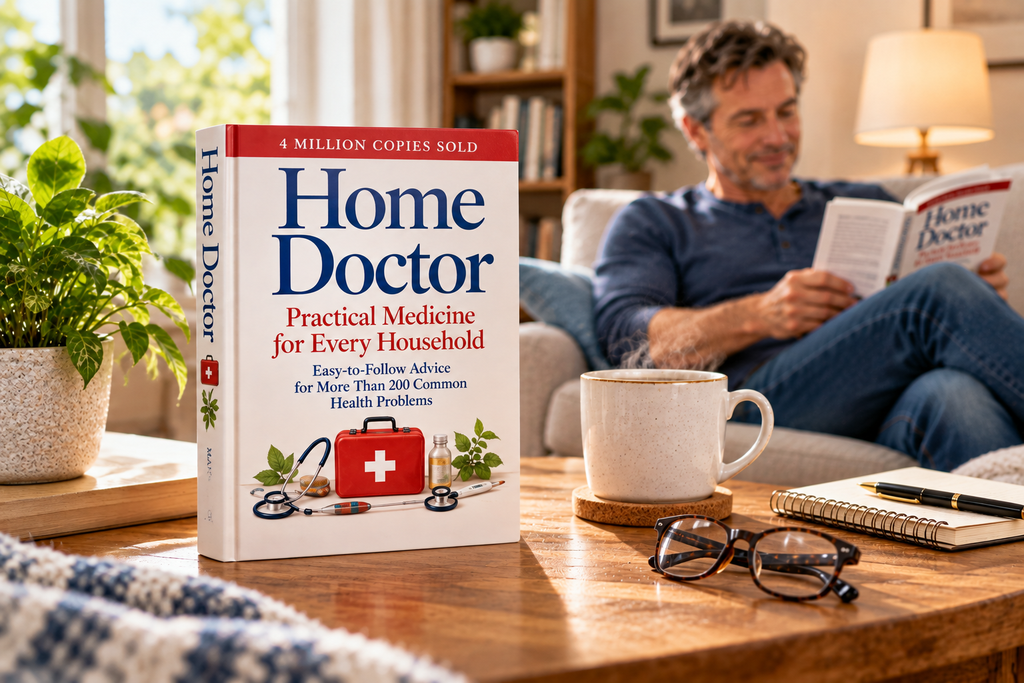
It’s designed as a handy reference for those moments when you want to understand a common health problem, know what you can safely do at home, and recognize when it’s time to get professional medical help.
Think of it as the kind of health guide you can keep around and come back to whenever a new question comes up.
👉 Explore Home Doctor and keep a practical health reference within reach.
Final Thoughts
You don’t have to spend allergy season feeling miserable.
You probably can’t control how much pollen is floating around outside, but you can control how much of it follows you home.
Start with the simple stuff: shower after being outside, change your clothes, keep windows closed when pollen is high, keep your bedroom clean, and pay attention to your personal triggers.
You may be surprised by how much these small habits can help.
And if your allergies keep getting in the way of your everyday life, don’t just keep suffering through them. Talk with a healthcare professional about your options.
A little prevention can go a long way when allergy season rolls around.
This article is for general educational purposes and isn’t a substitute for personalized medical advice.
Leave a Reply