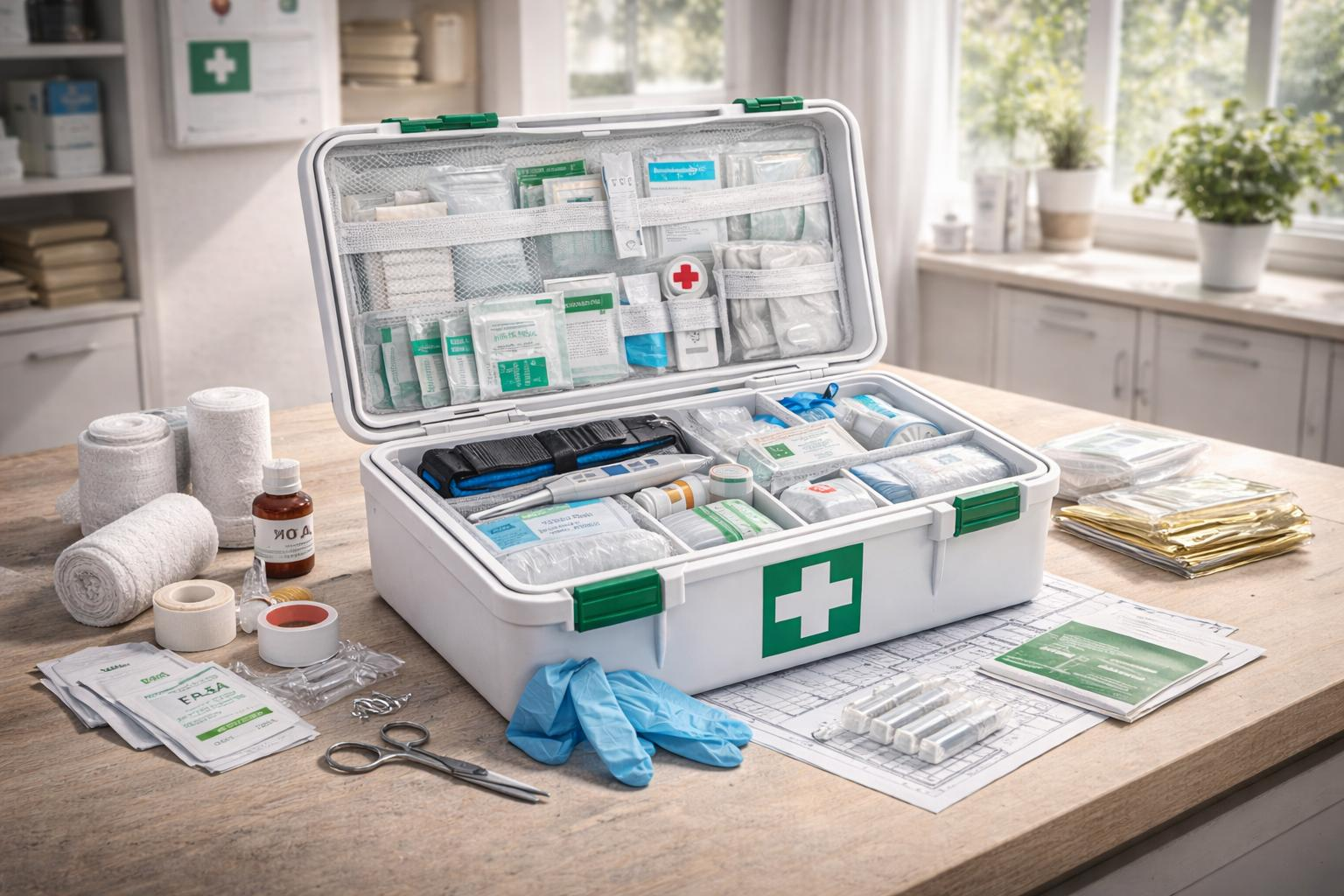
What would you do if someone in your family got a cut, burn, fever, sprain, or other minor injury at home?
You probably wouldn’t want to search through drawers looking for gauze or discover that your bandages ran out months ago.
That’s why having a well-stocked first aid kit at home is so important.
A home first aid kit gives you quick access to basic supplies when you need to clean a wound, protect an injury, manage a minor burn, or provide basic first aid while deciding whether professional medical care is necessary.
But a first aid kit is only useful when it contains the right supplies—and when everyone in the household knows where it is.
This guide covers 25 essential first aid kit items, how to organize them, where to store your kit, and what you should check regularly.
Important: A first aid kit is designed primarily for basic first aid and minor injuries. It does not replace professional medical evaluation or emergency medical care. For a serious or life-threatening emergency, call 911 in the U.S.
Why Every Home Needs a First Aid Kit
Minor injuries and illnesses can happen at any time.
A child may scrape a knee. Someone may accidentally cut a finger while cooking. A family member may get a minor burn or twist an ankle.
In these situations, having basic first aid supplies immediately available can make it easier to respond calmly and appropriately.
A good home first aid kit should be:
- Easy for adults to find
- Clearly labeled
- Organized so supplies are easy to locate
- Stocked with commonly needed items
- Checked regularly
- Kept away from young children
It’s also worth having a basic medical reference available. Supplies can help you treat an injury, but knowing what to do and when to seek medical attention is equally important.
25 Essential First Aid Kit Items for Your Home
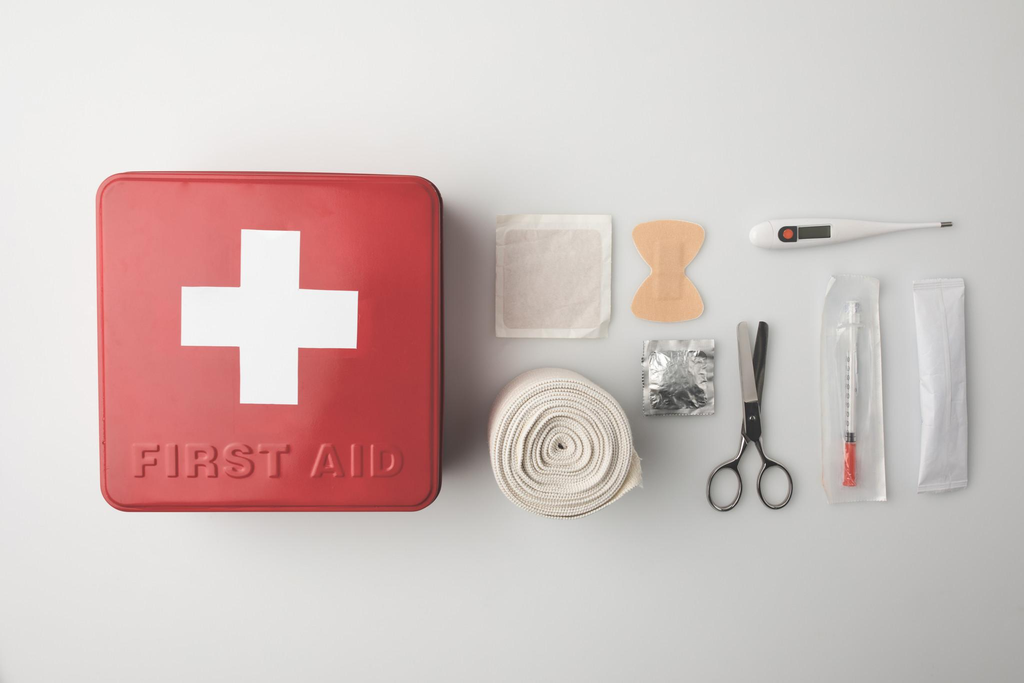
You don’t necessarily need an enormous emergency box filled with hundreds of products.
Start with practical supplies that cover common first aid situations.
1. Adhesive Bandages
Adhesive bandages are one of the most frequently used items in a home first aid kit.
Keep several sizes available, including small bandages for fingers and larger ones for knees, elbows, and other areas.
Consider including waterproof options as well.
2. Sterile Gauze Pads
Sterile gauze can be used to cover wounds and help control bleeding.
Different sizes are useful because small cuts and larger wounds require different amounts of coverage.
Keep the gauze sealed in its original packaging until needed.
3. Medical Tape
Medical tape helps secure gauze and dressings in place.
Choose a type that’s easy to tear or cut and suitable for skin.
4. Antiseptic Wipes
Antiseptic wipes can be useful for cleaning around minor wounds when appropriate.
Keeping individually packaged wipes in your kit makes them convenient to use and helps maintain cleanliness.
5. Antibiotic Ointment
An over-the-counter antibiotic ointment may be useful for certain minor cuts and scrapes.
Follow the product’s label directions and discontinue use if irritation or an allergic reaction occurs.
6. Disposable Gloves
Disposable gloves are an important part of basic first aid.
They provide a barrier between your hands and another person’s blood or bodily fluids.
Keep several pairs in your kit because gloves can tear or become contaminated during first aid.
7. Tweezers
A pair of clean tweezers can be useful for removing small, visible splinters or debris.
Do not dig deeply into a wound with tweezers. If an object is deeply embedded or difficult to remove, seek medical care.
8. First Aid Scissors
Small scissors can help cut medical tape, gauze, clothing, or other materials when providing first aid.
Keep them with your other supplies so you don’t have to search for household scissors during an emergency.
9. Instant Cold Pack
An instant cold pack can be useful for minor bumps, bruises, and certain soft-tissue injuries.
Follow the manufacturer’s instructions and protect the skin from excessive cold exposure.
10. Elastic Bandage
An elastic bandage can provide support for certain minor sprains and strains.
It should not be wrapped so tightly that it causes numbness, tingling, increased pain, or changes in skin color.
11. Digital Thermometer
A thermometer is useful for checking body temperature when someone feels feverish.
Keep it clean and store it according to the manufacturer’s instructions.
For households with children, choose a thermometer that’s appropriate for their age.
12. Burn Dressing or Burn Supplies
Minor burns can happen while cooking, using appliances, or handling hot objects.
Include appropriate burn first aid supplies in your kit.
For serious burns, extensive burns, electrical burns, chemical burns, or burns involving sensitive areas, seek urgent medical attention.
13. Eye Wash or Saline
Sterile saline can be useful when something gets into the eye.
Avoid rubbing the eye, especially if you suspect a foreign object has become embedded.
Seek medical attention when an eye injury is serious or symptoms persist.
14. CPR Face Shield
A CPR barrier device can provide an additional protective barrier during CPR.
If you’re responsible for caring for family members, consider taking a recognized CPR and first aid course so you know how to use emergency equipment properly.
15. Safety Pins
Safety pins are inexpensive but surprisingly useful.
They can help secure bandages, slings, or temporary dressings when appropriate.
Keep several sizes in your first aid kit.
16. Over-the-Counter Pain or Fever Medicine
Depending on the needs of your household, you may want to keep commonly used over-the-counter pain or fever medicines available.
Always follow the product label and dosing instructions.
For children, dosing often depends on age and/or weight, so never guess the dose.
Keep medications in their original labeled containers.
17. Hydrocortisone Cream
Over-the-counter hydrocortisone can be useful for certain minor skin irritations and itching.
Use it according to the product label and avoid applying it to areas where the label says it should not be used.
18. Oral Rehydration Supplies
Oral rehydration solution can be useful when someone loses fluids because of vomiting or diarrhea.
Keep commercially prepared products according to their storage instructions.
If someone shows signs of severe dehydration, confusion, inability to keep fluids down, or other concerning symptoms, seek medical care.
19. Hand Sanitizer
Hand sanitizer can be useful when soap and running water aren’t immediately available.
Whenever possible, washing your hands properly with soap and water is preferred.
20. Emergency Blanket
An emergency blanket takes up very little space and can be useful for helping keep someone warm while waiting for assistance.
It’s particularly useful if you maintain a larger emergency preparedness kit as well as a first aid kit.
21. Flashlight
A small flashlight can be extremely useful if an injury happens during a power outage or at night.
Consider keeping spare batteries with it if the flashlight uses replaceable batteries.
22. Disposable Masks
Masks can be useful in certain situations where reducing exposure to respiratory droplets or airborne particles is appropriate.
Keep them sealed and replace them if packaging becomes damaged.
23. Basic First Aid Reference Guide
A first aid kit shouldn’t only contain physical supplies.
A reliable first aid reference can help you remember what to do when you’re stressed or dealing with an unfamiliar situation.
Choose a current, reputable guide that covers basic first aid, injuries, symptoms, and emergency situations.
24. Emergency Contact Information
Keep important emergency information inside your kit.
This can include:
- 911
- Poison Control: 1-800-222-1222 in the U.S.
- Family doctors’ contact information
- Emergency contacts
- Preferred hospital information
- Important medical information for household members
Don’t rely entirely on your phone. A printed copy can be useful if your phone battery is dead or you cannot access your contacts.
25. Personal Medical Supplies
Finally, consider the specific needs of your household.
Depending on your family, this could include:
- Prescription medications
- EpiPen or other prescribed emergency medication
- Blood glucose supplies
- Contact lens supplies
- Specialized dressings
- Other doctor-recommended medical supplies
Keep prescription medications according to their specific storage requirements rather than automatically putting everything inside the first aid box.
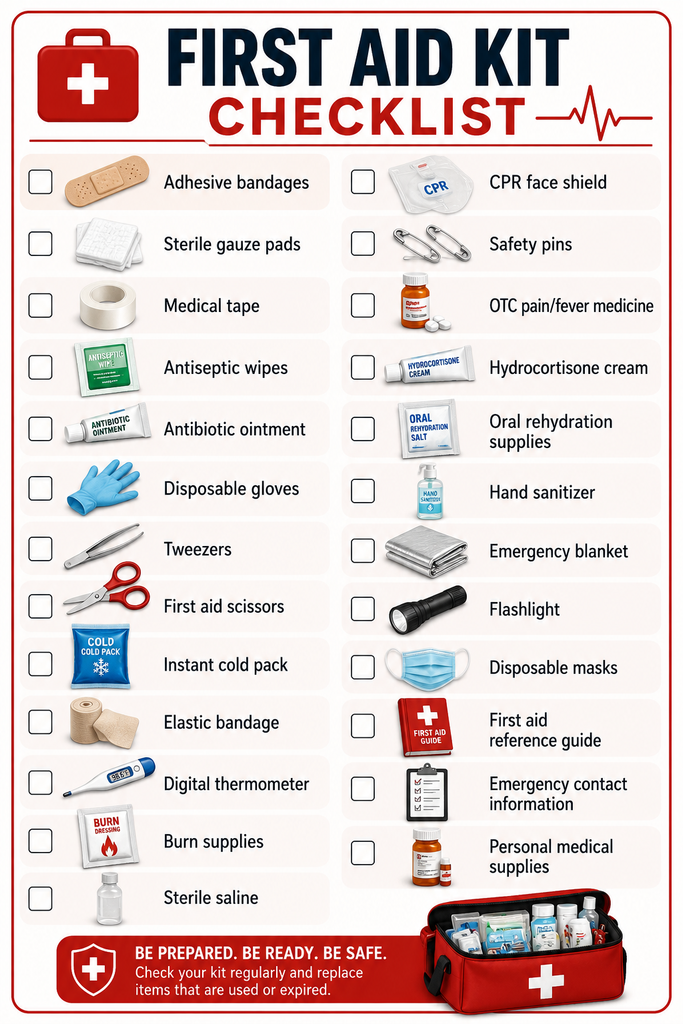
First Aid Kit Checklist
Here’s a simple checklist you can save or print:
How to Organize a Home First Aid Kit
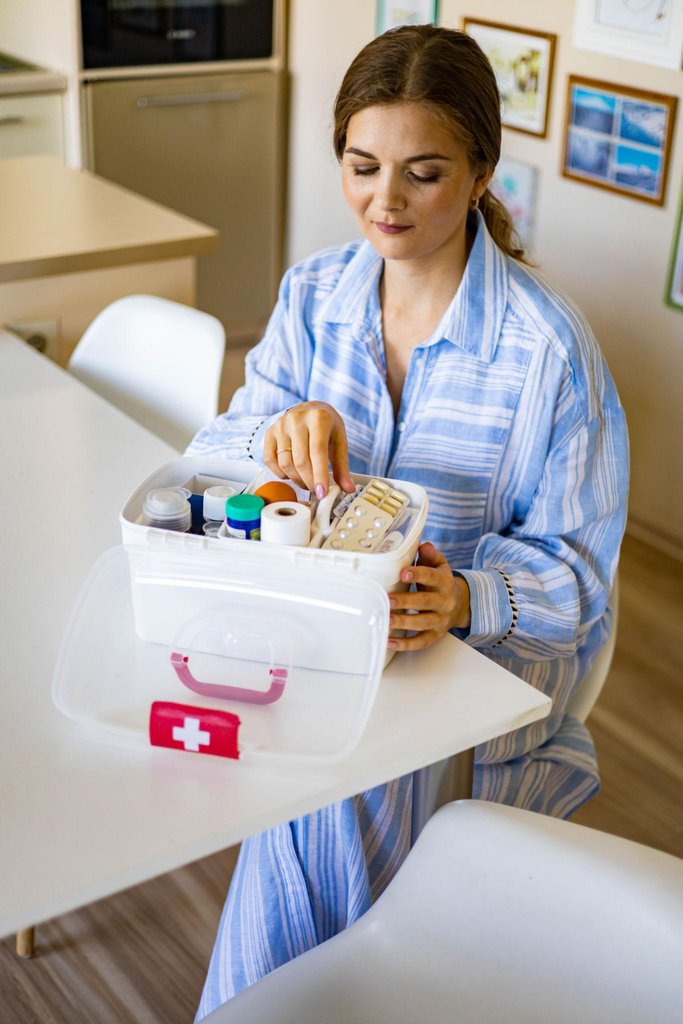
A first aid kit becomes much more useful when it’s organized.
Instead of throwing everything into one large container, group supplies by purpose.
Wound Care
Keep together:
- Bandages
- Gauze
- Medical tape
- Antiseptic wipes
- Antibiotic ointment
- Gloves
Injury Care
Keep together:
- Elastic bandage
- Cold packs
- Scissors
- Safety pins
Medications
Keep medicines in their original packaging and organize them so labels and expiration dates are easy to see.
Emergency Information
Keep your emergency contacts and basic medical information in a clearly marked section.
You can also place a basic first aid guide in the kit.
Where Should You Keep a First Aid Kit?
The best location is somewhere that is:
Easy for adults to reach but inaccessible to young children.
Good locations might include a clearly labeled cabinet or designated storage area.
Avoid storing the kit somewhere exposed to excessive heat, moisture, or direct sunlight.
You should also make sure that everyone who may need to use it knows where it is.
A first aid kit that nobody can find isn’t much help during an emergency.
Should You Have More Than One First Aid Kit?
For a larger home, having more than one kit can make sense.
You might keep:
- One primary kit at home
- One smaller kit in the car
- One kit for travel or outdoor activities
The contents can vary depending on where the kit will be used.
A car or travel kit should be compact, while a home kit can contain a broader range of supplies.
How Often Should You Check Your First Aid Kit?
Don’t buy a first aid kit and forget about it.
Check it periodically for:
- Expired medications
- Damaged packaging
- Used supplies
- Dried-out products
- Missing items
- Dead flashlight batteries
- Changes in household medical needs
A quick inspection every few months can help keep your supplies ready.
It’s especially smart to check your kit when daylight saving time changes, before major travel, or at the beginning of severe-weather seasons.
First Aid Kit vs. Home Medical Kit
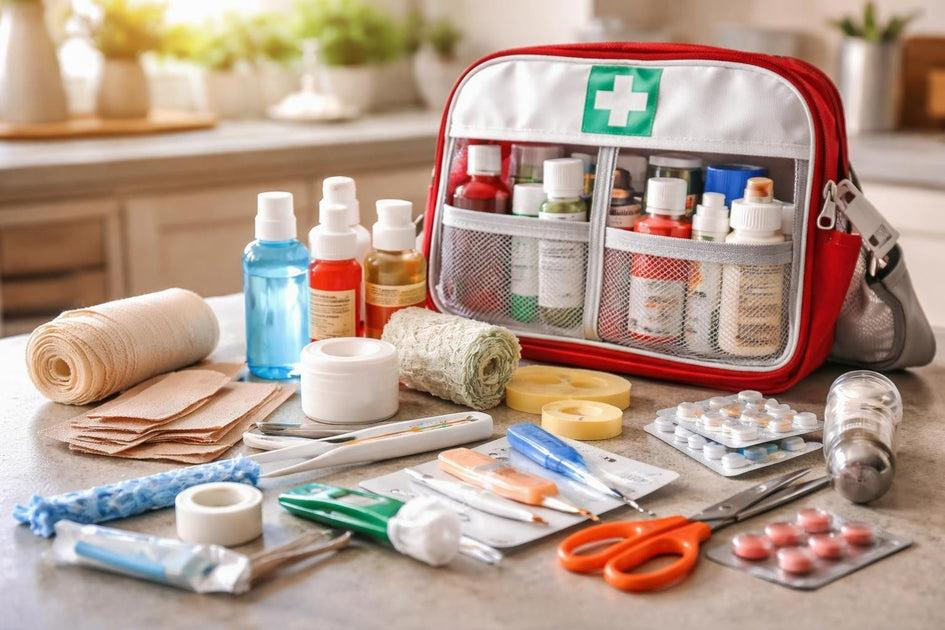
A first aid kit and a home medical kit aren’t necessarily the same thing.
A first aid kit is primarily designed for basic first aid and common minor injuries.
A more comprehensive home medical setup may also include:
- A thermometer
- Basic monitoring equipment
- Personal medications
- Medical records
- Symptom reference materials
- Emergency contacts
- Supplies specific to family members
Think of the first aid kit as one component of your overall home medical preparedness system.
What a First Aid Kit Can’t Do
It’s important not to treat a first aid kit as a substitute for medical care.
Some situations require immediate professional attention.
Call 911 or seek emergency medical care for potentially life-threatening symptoms such as:
- Severe difficulty breathing
- Severe bleeding that won’t stop
- Loss of consciousness
- Signs of a stroke
- Severe chest pain
- Serious burns
- Major injuries
- Severe allergic reactions
- Seizures or other medical emergencies
When in doubt about a potentially serious situation, it’s safer to seek professional medical advice rather than trying to manage the problem entirely at home.
Don’t Just Stock Supplies—Know How to Use Them
One of the biggest mistakes people make is assuming that owning a first aid kit means they’re prepared.
It doesn’t.
Imagine opening your kit during an emergency and realizing you have gauze, tape, gloves, and a dozen other supplies—but you’re not sure what to do.
Preparation involves both supplies and knowledge.
Consider taking a recognized first aid and CPR course.
You should also keep a dependable medical reference at home that explains common symptoms, injuries, basic first aid, and situations that require professional care.
A Practical Home Medical Reference
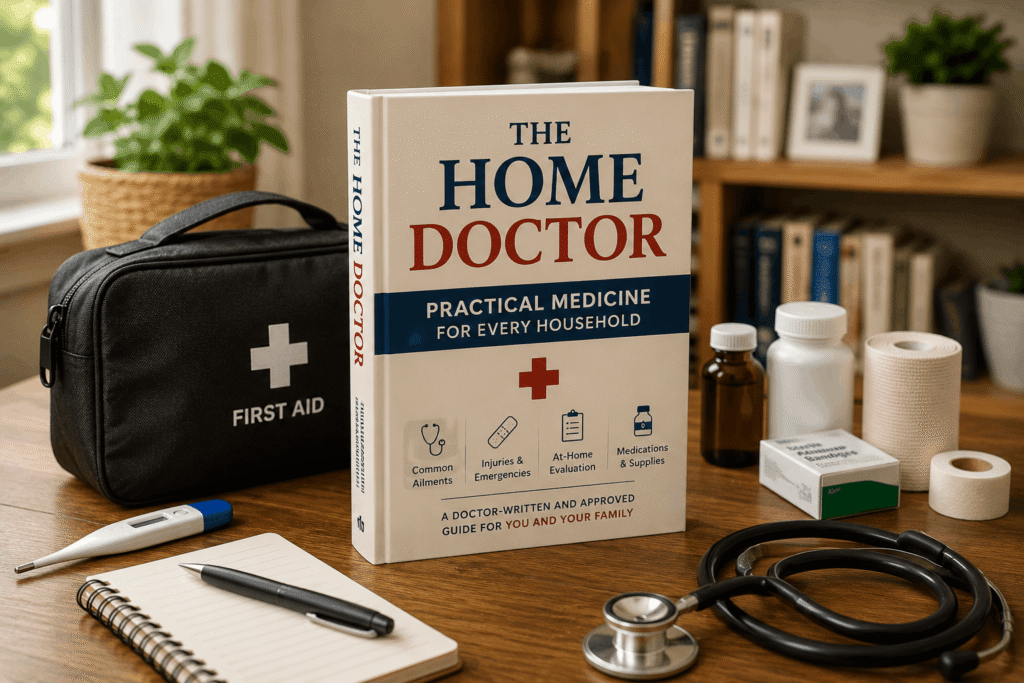
If you’re looking for a more comprehensive reference than a basic first aid manual, Home Doctor is designed as a practical home medical reference for families.
It can complement your first aid supplies by giving you information to consult when you’re dealing with common health concerns at home.
The goal isn’t to replace your doctor.
It’s to help you become better prepared for the situations that can happen between doctor’s visits, during weekends, at night, or when immediate access to medical care isn’t available.
Be Prepared for More Than Minor Injuries
Be Prepared for More Than Minor InjuriesA stocked first aid kit is a great start. A reliable medical reference can help you feel more prepared when unexpected health problems happen at home.
Home Doctor brings practical medical information together in one convenient reference for your household.
Build Your Home First Aid Kit Today
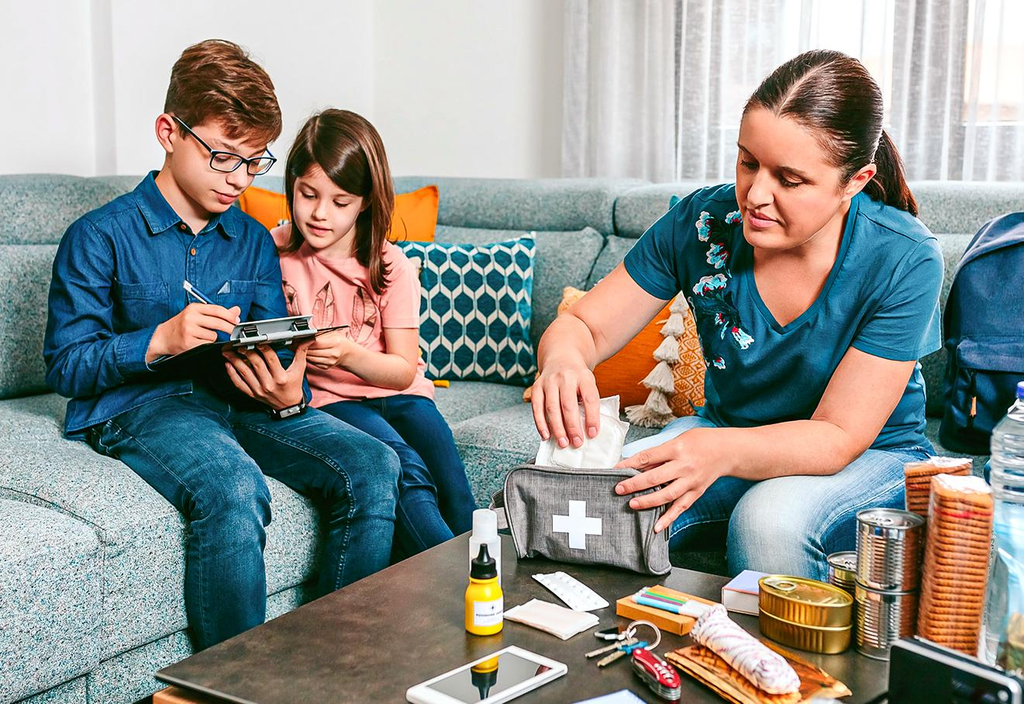
You don’t have to buy everything at once.
Start with the essentials:
- Get a suitable container.
- Add basic wound-care supplies.
- Add gloves, scissors, tweezers, and medical tape.
- Include a thermometer and cold pack.
- Add appropriate household medications.
- Add emergency contact information.
- Include a reliable first aid reference.
- Store everything in an accessible, clearly marked location.
- Check the kit regularly.
- Make sure household members know where it is.
A few minutes of preparation today can make a stressful situation much easier to handle.
A well-stocked first aid kit isn’t about expecting something to go wrong. It’s about being ready when something does.
Frequently Asked Questions
What should be in a first aid kit?
A basic first aid kit should contain items such as adhesive bandages, sterile gauze, medical tape, disposable gloves, antiseptic supplies, scissors, tweezers, an elastic bandage, cold packs, and other supplies appropriate for your household.
What is the most important item in a first aid kit?
There isn’t one single most important item. Bandages, gauze, gloves, and other wound-care supplies are among the most commonly useful items, but the right contents depend on your household’s needs.
How often should I replace items in my first aid kit?
Check your first aid kit regularly and replace anything expired, damaged, contaminated, dried out, or used. Follow expiration dates and storage instructions on individual products.
Where should I store my first aid kit?
Store it somewhere adults can access quickly but young children cannot. Keep it in a cool, dry location and make sure household members know where it is.
Is a first aid kit enough for an emergency?
No. A first aid kit is only one part of emergency preparedness. Serious or life-threatening situations require professional medical assistance.
Should I keep medicine in my first aid kit?
Some households may choose to keep appropriate over-the-counter medicines with their first aid supplies. Keep medications in their original packaging and follow all label and storage instructions. Prescription medicines should be stored according to their specific requirements.
What is the difference between a first aid kit and an emergency kit?
A first aid kit focuses primarily on medical supplies for injuries and basic first aid. A broader emergency kit may also contain water, food, flashlights, batteries, communication equipment, sanitation supplies, important documents, and other emergency necessities.
Final First Aid Kit Checklist
Before you consider your home prepared, ask yourself:
Do I have the supplies?
Can I find them quickly?
Are they still usable?
Does my family know where the kit is?
Do I know when an injury requires professional medical attention?
Do I have a reliable medical reference at home?
If you can answer yes to all five, you’re much better prepared for everyday medical situations at home.
A first aid kit is a simple investment, but its value comes from being complete, organized, accessible, and paired with the knowledge to use it properly.
Leave a Reply