
There’s a particular kind of stomach discomfort that can ruin an otherwise perfectly normal day.
You eat something a little too spicy, have an extra cup of tea or coffee, eat dinner later than usual and a few hours later your stomach feels heavy, bloated, or uncomfortable. Sometimes there’s burning in the upper abdomen. Sometimes you keep burping. Other times, it simply feels like your food is sitting in your stomach forever.
I’ve had those days myself, and one thing I’ve learned is that the best Gastric Home Remedy isn’t always some complicated mixture made from ten different ingredients. Very often, the basics matter more: eating slowly, identifying foods that trigger your symptoms, avoiding large late-night meals, staying hydrated, and giving your digestive system a little time to settle.
The important thing is to understand what you’re actually dealing with.
“Gastric problem” is a phrase people commonly use for indigestion, gas, bloating, acidity, or heartburn. These symptoms can overlap, but they aren’t necessarily the same condition. Indigestion, for example, can cause upper-abdominal discomfort or burning, early fullness, bloating, nausea, and belching.
So let’s talk about some practical things you can try at home—and, just as importantly, when you shouldn’t try to handle the problem yourself.
What Does “Gastric Problem” Usually Mean?
Before trying any Gastric Home Remedy, it helps to identify the symptoms.
You might notice:
- Bloating or a feeling of fullness
- Frequent burping
- Gas
- Mild burning or discomfort in the upper abdomen
- Feeling full unusually quickly
- Nausea
- Heartburn
- Food or a bitter-tasting fluid coming back into your mouth
These symptoms may be related to indigestion, acid reflux, or excess gas, among other possibilities.
And here’s something worth remembering: just because a symptom feels like “gas” doesn’t automatically mean it is harmless gas.
If the discomfort is unusual, severe, persistent, or keeps returning, it deserves proper attention.
1. Start With Smaller, Slower Meals
This is probably one of the simplest changes, but it is surprisingly easy to overlook.
When you’re extremely hungry, it’s tempting to eat quickly and go back for another serving. Unfortunately, eating too much or too quickly can leave you feeling painfully full and bloated.
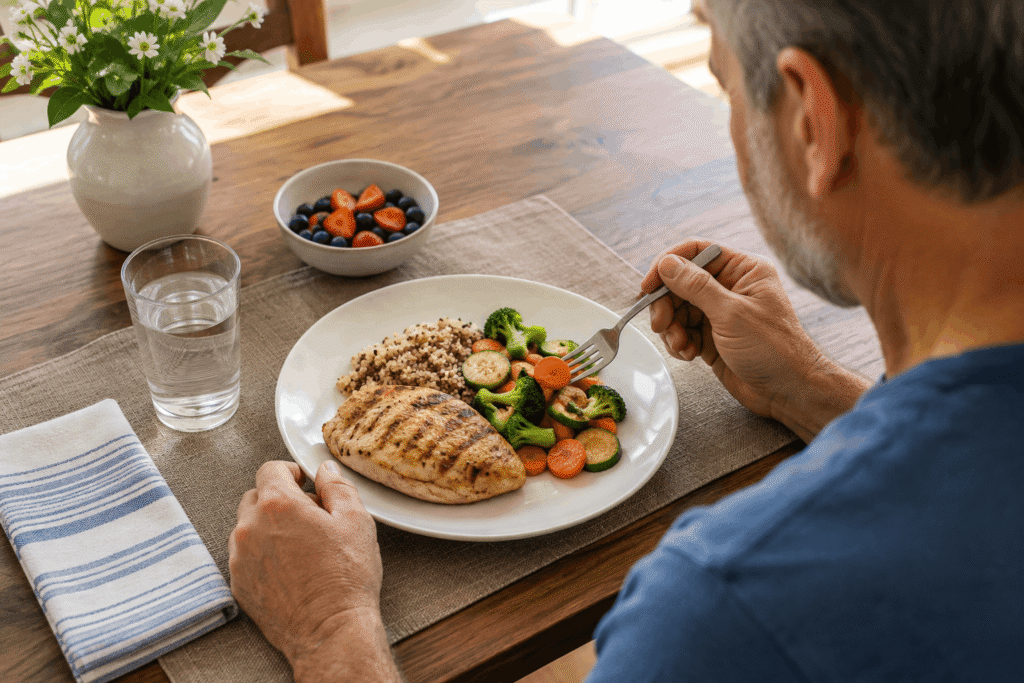
Try eating a little more slowly. Put your spoon or fork down occasionally. Give yourself time to notice when you’re comfortably full rather than waiting until you’re stuffed.
A useful Gastric Home Remedy approach is to make your meals slightly smaller and see whether your symptoms improve.
This can be particularly helpful if you regularly feel uncomfortable after large meals. For people experiencing gas symptoms, health professionals may also recommend smaller, more frequent meals depending on the individual situation.
A real-life example
I remember a friend who used to complain about “acidity” almost every evening. His first solution was always another medicine.
Eventually, he noticed something embarrassingly simple: dinner was enormous.
He would skip lunch or eat very little during the day, get home starving, and eat a huge dinner quickly. Once he started eating more regularly and reduced the size of his evening meal, his discomfort became much less frequent.
Sometimes the first remedy isn’t something you add. It’s something you stop doing.
2. Pay Attention to Your Trigger Foods
There isn’t one universal “bad food” that causes indigestion in everyone.
That’s important.
Some people can drink coffee every morning without a problem. Others discover that coffee reliably triggers burning or discomfort. The same can happen with spicy foods, fatty meals, carbonated drinks, certain fruits, or other foods.
NIDDK notes that individual triggers vary, and some people with functional dyspepsia find that foods such as fatty or greasy foods, caffeinated drinks, carbonated drinks, and certain fruits or grains worsen their symptoms.
So instead of eliminating half your kitchen, keep a simple food-and-symptom diary.
For a week or two, write down:
What you ate → when you ate it → what symptoms appeared → how long they lasted.
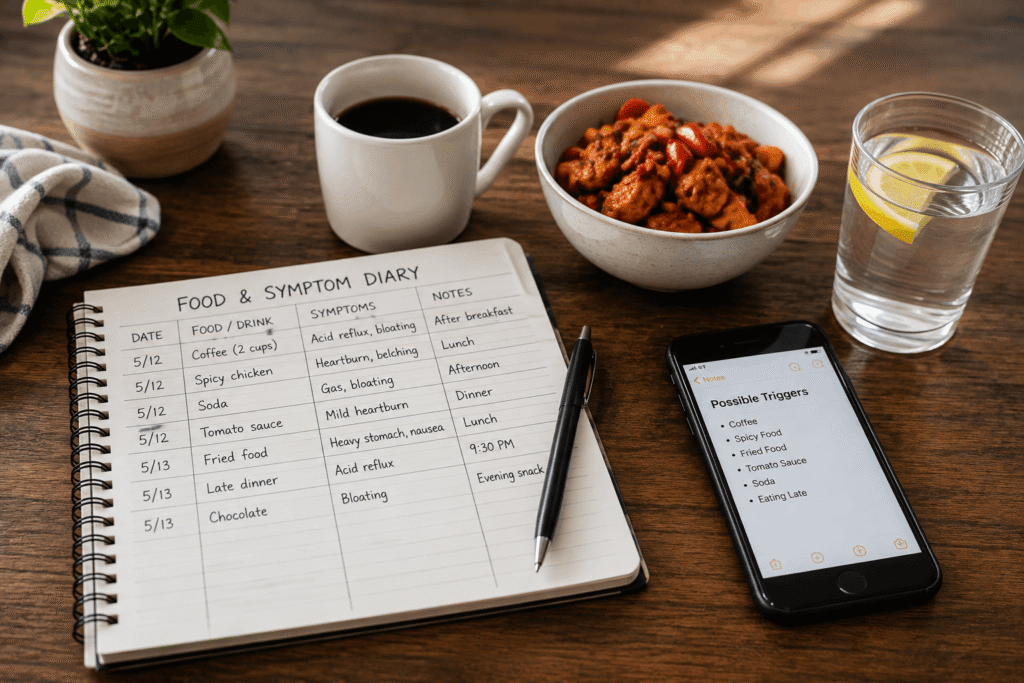
You may start seeing a pattern.
This makes your Gastric Home Remedy strategy much more personalized because you’re working with your own body rather than following a random list from the internet.
3. Cut Back on Carbonated Drinks
If you’re dealing with bloating or frequent burping, fizzy drinks are worth reconsidering.
Carbonated beverages can increase the amount of gas in the digestive tract, and drinking through a straw or chewing gum can also contribute to swallowing more air.
Try replacing fizzy drinks with plain water for several days and see how your stomach responds.
You don’t necessarily need to make a lifelong commitment to never drinking soda again. The goal is to discover whether it is contributing to your particular symptoms.
4. Don’t Lie Down Immediately After Eating
This is one of those habits that sounds obvious until you realize how often people do it.
You eat dinner, feel tired, and lie down on the sofa or bed almost immediately.
If heartburn or reflux is part of your problem, that habit can make things worse. The NHS recommends avoiding food for around 3–4 hours before going to bed if you experience indigestion.
A simple Gastric Home Remedy is therefore to give yourself some time between dinner and bedtime.
If nighttime reflux is a recurring problem, raising your upper body while sleeping may also help. NIDDK recommends elevating the head during sleep for people with GERD symptoms.
5. Drink Water Regularly
When your stomach is uncomfortable, it’s easy to start experimenting with all kinds of homemade drinks.
Before reaching for something complicated, make sure you’re simply drinking enough water.
Water won’t magically cure every cause of stomach discomfort, but maintaining normal hydration is a sensible part of taking care of yourself.
I especially prefer this approach because it doesn’t involve turning every minor digestive problem into a complicated recipe.
If you’re experiencing vomiting or diarrhea along with stomach symptoms, however, dehydration can become a bigger concern and you may need appropriate medical advice.
6. Be Careful With Tea, Coffee, and Alcohol
Your morning coffee may be your favorite part of the day.
I understand.
But if you repeatedly experience indigestion or heartburn, it’s worth testing whether caffeine is contributing to the problem. The NHS recommends cutting down on tea, coffee, cola, and alcohol for people experiencing indigestion.
Don’t assume you have to quit everything permanently.
Instead, try a short experiment.
Reduce your intake for several days and observe what happens.
If your symptoms improve significantly, you’ve learned something useful about your personal triggers.
That’s often more valuable than simply searching for another Gastric Home Remedy every time your stomach acts up.
7. Eat Less Greasy and Very Spicy Food
There’s a reason people often associate stomach discomfort with heavy meals.
Fatty and greasy foods can worsen symptoms in some people with indigestion, while spicy foods may also be a personal trigger.
If your stomach is already irritated, keep meals relatively simple for a while.
Think of foods that are familiar, moderate in portion, and not excessively greasy.
And don’t assume that because something is “natural” it automatically means it’s gentle on your stomach.
That’s a mistake people make with homemade remedies all the time.
8. Reduce the Amount of Air You Swallow
This sounds strange until you realize how much air we can swallow without noticing.
Eating very quickly, chewing gum, drinking through straws, talking while eating, and drinking carbonated beverages can increase swallowed air and contribute to belching or gas.
Try slowing down when you eat.
Sit down instead of eating while rushing around.
Chew properly.
It sounds almost too simple, but sometimes the simplest Gastric Home Remedy is changing the behavior that created the problem in the first place.
9. Take a Short, Gentle Walk
If you’ve just eaten a large meal and feel heavy, lying down may feel tempting.
Instead, consider taking a gentle walk if you feel well enough.
I’m not talking about intense exercise or going for a hard run immediately after dinner. Just moving around instead of immediately lying down can be a more comfortable option.
The larger lesson is that your digestive habits are connected to your daily routine. Sleep, meals, stress, movement, and food choices can all influence how your stomach feels.

10. Don’t Automatically Blame “Acid”
This is one of the most important points in this article.
People often use “gastric,” “acidity,” “gas,” and “indigestion” interchangeably.
But different problems can produce similar symptoms.
Indigestion may be related to functional dyspepsia, medications, reflux, ulcers, infections such as H. pylori, or other medical conditions.
So if your symptoms keep coming back, don’t spend months trying one Gastric Home Remedy after another without figuring out what’s actually happening.
Persistent indigestion deserves medical evaluation.
What About Over-the-Counter Medicines?
Sometimes lifestyle changes aren’t enough.
Pharmacists can recommend medicines such as antacids or alginates for some indigestion symptoms, while doctors may recommend other medicines depending on the cause.
But there’s an important distinction between occasionally treating a mild symptom and repeatedly masking a problem.
If you’re needing stomach medicine frequently, speak with a healthcare professional rather than continuously increasing your self-treatment.
Also, certain medicines can actually contribute to indigestion. For example, NSAID pain relievers such as ibuprofen can make indigestion worse in some people.
A Simple Gastric Home Remedy Routine to Try
If you’re dealing with occasional mild indigestion, here’s a practical routine you can consider:
After a meal:
- Don’t eat until you’re painfully full.
- Eat slowly.
- Avoid fizzy drinks.
- Stay upright rather than immediately lying down.
- Take a gentle walk if comfortable.
- Drink water normally.
- Pay attention to which foods seem to trigger your symptoms.
- Avoid a large meal close to bedtime.
This isn’t a magic cure.
It’s simply a collection of sensible habits that can help you understand and manage occasional digestive discomfort.
And that’s how I’d approach a Gastric Home Remedy: start simple, observe your symptoms, and don’t ignore persistent problems.
When a “Gastric Problem” Needs a Doctor
This is the part I really don’t want you to skip.
Home remedies are appropriate only for mild, occasional symptoms when there are no warning signs.
Seek medical care promptly if you have severe or constant abdominal pain, frequent vomiting, difficulty or pain when swallowing, unexplained weight loss, black or tarry stools, bloody vomit, yellowing of the skin or eyes, persistent abdominal swelling, or shortness of breath. Chest, jaw, neck, or arm pain can also indicate something more serious and should not simply be assumed to be indigestion.
You should also speak with a doctor if your indigestion doesn’t improve or keeps coming back.
In other words, don’t let the phrase “it’s just gas” stop you from getting help when something doesn’t feel right.
Why I Like Keeping a Home Medical Reference
One reason I became more interested in home healthcare is that small health problems have a way of becoming stressful when you don’t know what you’re looking at.
You search online.
You find five different explanations.
Then you discover ten different remedies.
Then you’re somehow reading about a completely unrelated disease at 2 a.m.
I’ve been there.
That’s why having a reliable reference at home can be useful—not as a replacement for your doctor, but as a resource for understanding common health situations and knowing what questions to ask.
One resource worth looking at is The Home Doctor: Practical Medicine for Every Household.
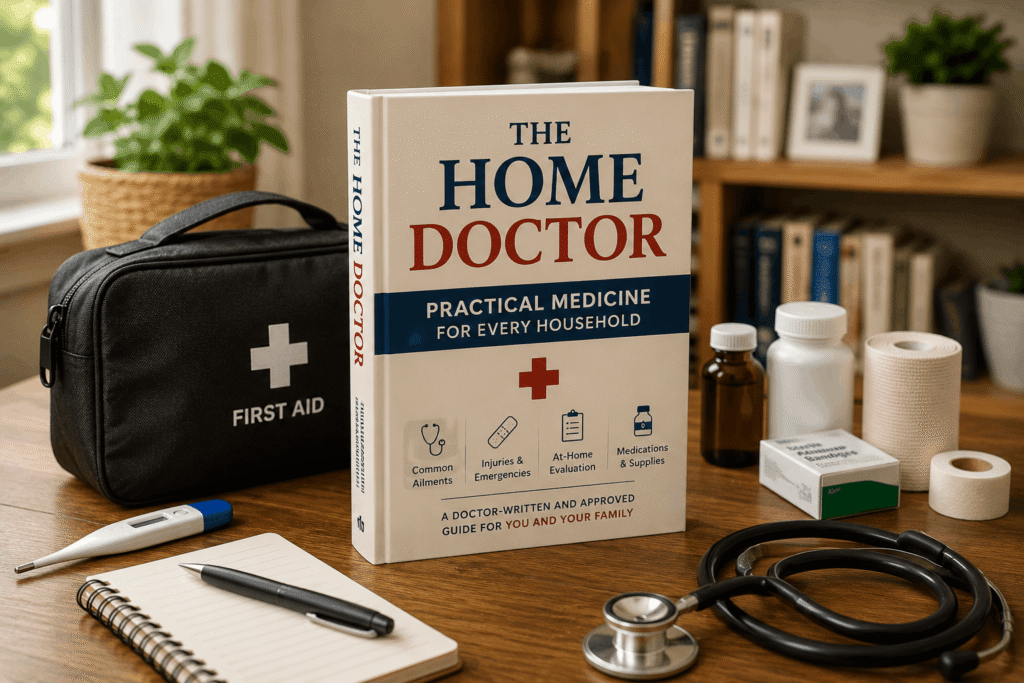
According to the publisher’s page, it is a doctor-written and approved, 300+ page guide covering common ailments, medical supplies, injuries, abdominal pain, and other practical health situations.
The book also includes sections on abdominal pain and an at-home abdominal evaluation, along with practical information about different health situations.
See The Home Doctor: Practical Medicine for Every Household
I wouldn’t buy a book like this because you expect it to replace professional medical care. I’d look at it as another tool in your household preparedness kit—a reference you can turn to when you’re trying to understand what’s happening and decide what your next step should be.
Final Thoughts
The best Gastric Home Remedy isn’t necessarily the most unusual one.
Often, it’s getting back to the basics.
Eat a little more slowly. Reduce oversized meals. Notice your trigger foods. Cut back on fizzy drinks if they make you bloated. Avoid eating right before bed. Stay hydrated. Give your body time to settle.
And perhaps most importantly, don’t repeatedly treat symptoms without asking why they’re happening.
I learned that lesson myself: when your stomach complains occasionally, a few simple changes may be all you need. But when the same problem keeps returning, that’s your body asking for more attention—not another random remedy from the internet.
Use home care for mild, occasional discomfort.
Use professional medical care when the symptoms are persistent, severe, unusual, or accompanied by warning signs.
And if you’re someone who likes being prepared before a health problem happens, consider keeping a practical medical reference at home. The Home Doctor is one option to explore if you want a broader household health guide alongside your normal healthcare resources.
Affiliate disclosure: This article contains an affiliate link. If you purchase through the link, We may earn a commission at no additional cost to you. This does not change my recommendation or the information provided in this article.
This article is for general educational purposes and is not a substitute for diagnosis or treatment from a qualified healthcare professional.
Leave a Reply